

 E-Paper


‘He Was Poisoned.’ Toxic Fumes on Planes Blamed for Deaths of Pilots and Crew

Doctors and researchers increasingly see a link between exposures to contaminated cabin air and fatal illnesses.
An American Airlines pilot, Ron Weiland was 54 years old and in good physical shape when he mysteriously lost his ability to play ping pong.

During a game with his wife and two neighbors in October 2016, Weiland swung and missed the ball entirely when trying to serve. He missed easy shots that he would normally smash away.
Weeks later, after a cocktail at a friend’s house in Lake Worth, Fla., he started slurring his words. “You did just have one drink in there, right?” his wife Martha asked him.
Weiland made his last flight in May 2017, after he had trouble making his passenger announcements. In June of that year he was diagnosed with amyotrophic lateral sclerosis, or ALS, a rapid neurodegenerative disease that kills the brain cells needed to control muscles in the body.
Weiland died on Jan. 14, 2019.
Two months before the ping pong match, Weiland had noticed an intense smell of engine oil as he was taxiing his Boeing 767 down the runway at Miami International Airport. He aborted the flight, offloaded the passengers and stayed on board to help the mechanics.
As the engines ran, the smell came back, along with plumes of a fog deep enough that he struggled to see beyond the first 15 rows.
The incident was what is known in the industry as a fume event, when leaks of synthetic oils or other fluids into an aircraft’s engines produce toxic gases that are released into the cabin and cockpit via the air supply.
The effects of fume events are often fleeting, mild or present no symptoms at all. But some passengers and crew members have been diagnosed with long-lasting and severe illnesses.
In the most extreme cases, including Weiland’s, fume events have allegedly been fatal.

By the end of his life, Weiland couldn’t speak and was given an iPad by his daughter-in-law, a speech pathologist, to communicate.
“I mean, there were occasions where he would write ‘fumes’ and then just repeat, repeat, repeat, just ‘fumes,’ ‘fumes,’ ‘fumes,’” Martha Weiland said in a sworn deposition.
She filed a lawsuit against Boeing in 2020, alleging that her husband’s exposure to contaminated cabin air led him to develop the disease that killed him.
In 2022, a day before jury selection, Boeing settled the complaint. The financial amount is subject to a nondisclosure agreement.
In its legal response to Weiland’s suit, Boeing denied the allegations, noting that its aircraft designs—including the bleed system that siphons air from the engines into the aircraft—have for decades been approved for use by the Federal Aviation Administration.
Reports of fume events have surged in recent years. The Wall Street Journal reported in September that among the biggest U.S. airlines they happened nearly 10 times as much in 2024 as a decade earlier, based on an analysis of more than one million so-called service difficulty reports filed to an FAA database.
Shortly after, 39 members of Congress wrote to FAA administrator Bryan Bedford to ask for the agency to accelerate efforts to address fume events and provide a new mechanism for passengers to report incidents. Airlines including American and Delta also have been upgrading some of their aircraft to help address the problem.
While the existence of fume events isn’t contested, the possibility that they could lead to serious illness—and even deaths—is hotly disputed.
Responding to the Weiland suit, Boeing’s lawyers echoed the industry’s longtime position that the research into the health effects of fume events is inconclusive.
In a statement, a Boeing spokeswoman said: “The cabin air inside Boeing airplanes is safe.” She said researchers and government agencies have done a number of studies showing “that contaminant levels on aircraft are generally low and that health and safety standards are met.”
She said the company will continue working with scientists to better understand cabin environments and study new technologies.

Yet a Journal review of dozens of recent research papers and interviews with more than 20 medical professionals, including brain and heart specialists, epidemiologists and toxicologists, show an increasing conviction about the link between fume events and potentially fatal diagnoses.
“It’s a pattern. I can’t ignore it,” said Frank van de Goot, a Dutch forensic pathologist who said he has performed autopsies on 18 crew members who showed signs of toxic exposures.
American Airlines wasn’t a party to the Weiland lawsuit. In a statement, a spokesperson said the airline “continues to see a reduction in these types of events” and is investing in training and other procedures to ensure the highest-possible cabin-air quality.
‘Lots of evidence’
Gregory O’Shanick, a specialist in brain-injury medicine from Richmond, Va., has treated flight crew for serious injuries that he says were caused by toxic exposure on commercial aircraft.
He has also identified what he said are clear parallels between crews’ symptoms and those he’s found in soldiers with concussive traumas caused by chemical exposures and explosive blasts on battlefields.
In both groups, the links between severe head injury and life-threatening brain diseases including ALS, dementia, brain tumors, and acute depression are “extremely well-connected and well-associated,” said O’Shanick, who served for 14 years as the medical director for the Brain Injury Association of America.
O’Shanick, Van de Goot and other medical professionals, including Michael Freeman, a professor of forensic epidemiology at Maastricht University, agreed with the industry position that direct causation hasn’t been proven, in part because companies have objected to placing air quality monitors on aircraft. But they also stressed an urgency for that work to be done.
“We have a lot to be concerned about and a lot to be suspicious about, we really do,” said Freeman, who edits the Journal of Forensic and Legal Medicine.
In 2021, researchers at the University of California, Berkeley found that acute exposure to the chemical formaldehyde led to a 78% increase in the risk of developing ALS and a 71% increase in brain cancer. Last year, formaldehyde was identified in an FAA-funded study as repeatedly exceeding occupational exposure guidelines even when low amounts of oil mixes into the air supply.
A separate Harvard-led study in 2024 found pilots had the fourth-highest mortality rate from Alzheimer’s out of 443 occupations in the U.S.
While ALS is one of the more complex neurodegenerative diseases, researchers are increasingly confident that anyone can develop the disease if they accumulate—or are exposed to—enough factors to reach a tipping point.
Having susceptible genes is one. Others include multiple types of exposures associated with fume events: chemicals that appear in both pesticides and engine oils; high levels of ultrafine particles and solvents like formaldehyde; and brain trauma.
In Weiland’s suit against Boeing, his lawyers noted that he had several other prior risk factors: His uncle had died from the disease in his late 70s; he had one of the relevant gene mutations; and he had spent six years flying C-130s for the Air Force.
But they said the evidence pointed to his fume event as the trigger.
“There is enough data, as imperfect as it is, to say that had he not been a pilot, he would have developed it later in his life, if at all,” said Samuel Goldman, a neuroepidemiologist at the University of California at San Francisco, who testified in Weiland’s case.
‘We would have killed every person’

On July 17, 2015, James Anderberg had been piloting a Spirit Airlines flight from Chicago to Minneapolis and back, with plans to then go to Boston. On the first two legs, he and first officer Eric Tellman noticed a dirty sock-like smell—an indicator of a fume event—spreading through the Airbus A319 just as they started their descent.
The pilots called for maintenance, who told them there wasn’t an issue to fix. When he objected, Anderberg’s superior told him his protests were delaying the day’s flying schedule. Spirit Airlines didn’t respond to requests for comment.
As they started their third descent, over Boston, the fumes returned.
Starting to feel confused and worried he might pass out, Tellman reached for his oxygen mask. To his left, he saw Anderberg slumped in his seat, his eyes half shut. Tellman forced a mask over his head.
“To be clear: had I not donned my oxygen mask on that July flight, we would have killed every person on that aircraft,” Tellman wrote in a letter to his union detailing the experience.
Over the next few days both pilots were bedridden, vomiting, with diarrhea, and tremors in their hands and legs. After Anderberg returned to work, pilots flying with him noticed he was struggling with his hand-eye coordination.
After one flight, he parked his aircraft so askew that ground crew had to reposition the jet.
On Sep. 4, Anderberg went to a local hospital complaining of shaking in his arms and legs and severe insomnia.
The next day, after he allegedly acted aggressively toward a woman on a street miles from his home, the woman called the police. When officers arrived they noted the 53-year-old pilot was battling to answer basic questions.
On the ground with his arms handcuffed behind his back, Anderberg suffered a fatal heart attack. It was exactly 50 days after his exposure.
In his autopsy, examiners found inflammation in his heart muscles along with a toxic level of painkillers in his blood. But his examiner was clear: The drug didn’t fully explain his erratic behavior or his symptoms the day before.
His cause of death was ruled as undetermined, with the medical examiner stating it wasn’t possible to confirm or exclude the role played by his exposure to toxic fumes on his aircraft.
In April this year, researchers in Italy described a range of heart injuries caused by toxic exposure to a set of chemicals found in combusted engine oil. The list matched—nearly exactly—those in Anderberg’s postmortem.
Airbus declined to comment and Spirit didn’t respond.
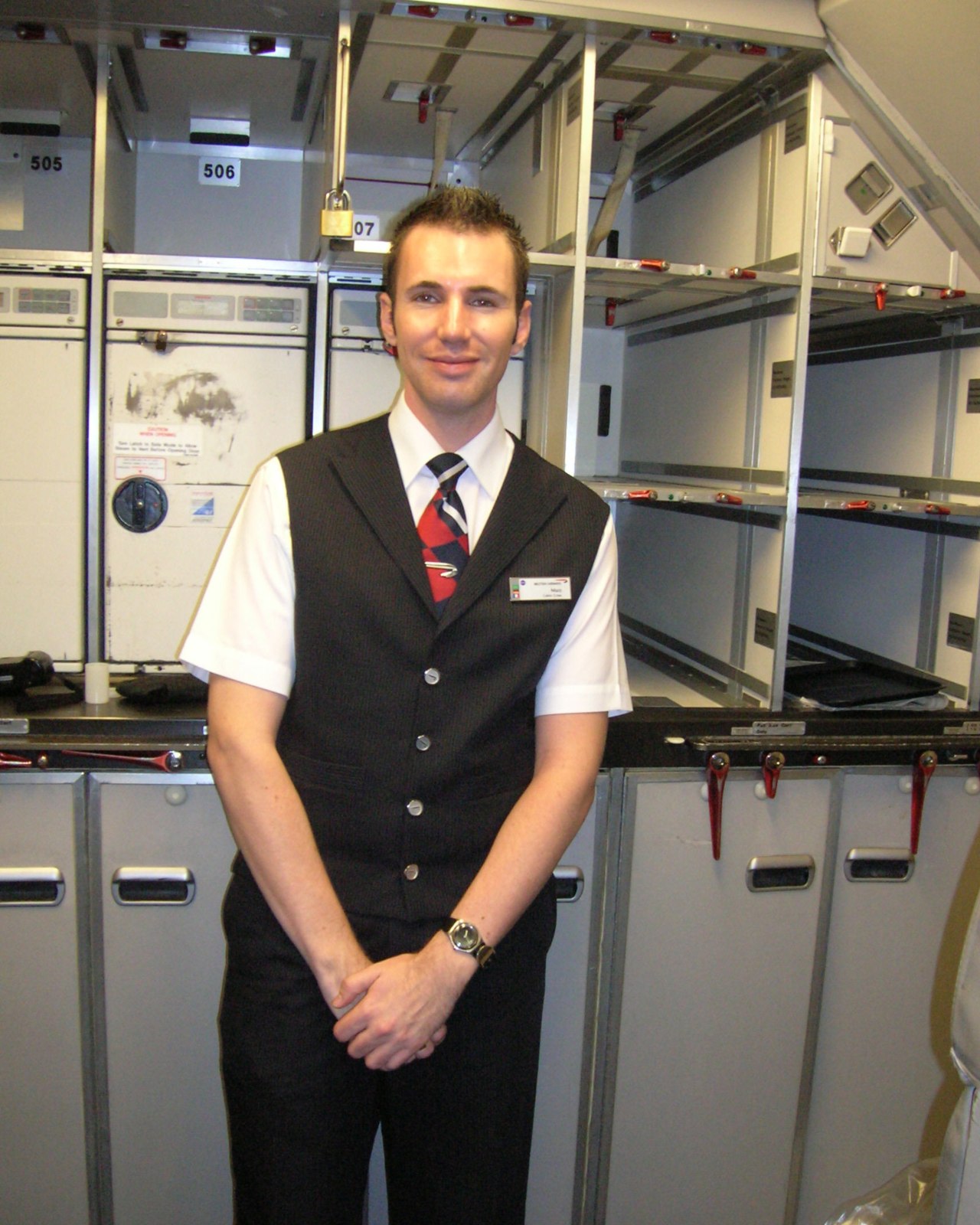
A year before Anderberg died, Matthew Bass, a 34-year-old British Airways flight attendant was having pizza and drinks with colleagues when he went to lie down and suddenly stopped breathing. In the preceding weeks, he had been inexplicably losing weight, had struggled with coordination, and felt near-constant fatigue.
An autopsy identified inflammation in Bass’s peripheral nervous system and in his heart muscles—similar to Anderberg’s. Both conditions also matched those found in another British Airways crew member, Richard Westgate, a pilot who had died a few years earlier at age 43. Westgate’s family had contended his ill-health was caused by fumes.
After their son died, Charlie and Fiona Bass flew in Van de Goot, the Dutch pathologist, to conduct a specialist postmortem. They also sent off tissue samples from Matthew’s brain to the head of Duke University’s neurotoxicology lab. Both reported the same finding: Their son had extensive damage to his nervous system consistent with exposure to heated engine oils.
In an interview, Van de Goot said he had identified the same inflammation in 18 individual autopsies of pilots and cabin crew.
Ultimately, in 2018, Bass’s coroner pointed to high levels of alcohol in his blood and said that there wasn’t enough evidence to state that exposure to fumes played a role.
But in a letter, he asked the chief coroner that an instruction be distributed urging his peers to consider toxic-fume exposure when conducting autopsies on relatively young pilots or flight attendants who died in atypical circumstances.
For Bass’s parents, it was a small, but meaningful victory.
“I asked the chief coroner about a year and half ago, and they didn’t think it had been sent,” Charlie Bass said in an interview.
British Airways didn’t respond to requests for comment.
‘We just don’t commit suicide’
David Dunlap, 61, has piloted both military and commercial aircraft since 1987. It was only after he had taken a job flying for JetBlue in 2005 that he first encountered the dirty socks odor.
Around 2016, he and his colleagues started noticing the smell more frequently, and simultaneously, began to hear story after story about JetBlue colleagues who had taken their lives.
“We’re generally happy people, generally upbeat, motivated,” Dunlap said in an interview. “We just don’t commit suicide like that.”
Dunlap left JetBlue in 2018 after struggling with severe headaches that he said got worse with successive fume events, and which his FAA physician was concerned was connected to his exposure.

Dunlap later hired an actuarial firm to run a mortality study, which he submitted in a legal process against the airline.
The findings showed between 2016 and 2019, the suicide rate among JetBlue pilots was more than twice as high as the same age group in the national population. It also identified a higher overall mortality compared with another major U.S. carrier that wasn’t named.
“While air quality concerns are not unique to JetBlue, we continue working to minimize these events,” an airline spokesman said. “We would never operate an aircraft if we believed it posed a health or safety risk to our customers or crew members.”
In interviews with more than a dozen pilots and flight attendants, some of whom are still active, crew described their struggles with depression after being diagnosed with chemically-induced brain injuries. Many described ongoing battles with suicidal thoughts; some described failed attempts.
Studies have shown that head trauma akin to those experienced by crews from toxic air on airplanes increases the chances of a person developing “any kind of depression or affective disorder” over the course of their life, and often sooner, said O’Shanick, the specialist in brain injuries.
In typical cases, the exposure damages the brain’s frontal lobe, which slows cognition, impairs impulse control, restricts dopamine production and affects mood. The combination increases the risk of self-harm.
“People think depression is related mostly to emotional reactions, but depression can happen because of neurological injury,” said Clifford Hopewell, a neuropsychologist and retired U.S. Army Major who treated soldiers in Iraq with brain injuries. He described the link between chemical exposure and risk of suicide as “incontrovertible.”
In early January, 2018, American Airlines put out a call for a pilot who could take a maintenance team down to Aruba. An Airbus A330 had been stranded there after oil had leaked into the air supply.
Andy Laczko, 63, threw up his hand.
“He just wanted to fly all the time,” said his widow, Diane, a flight attendant who met Laczko while on duty in 1989.
On the island, Laczko waited as mechanics tried to fix the plane’s auxiliary power unit that sits in the tail of the plane. After two days, they gave up, telling Laczko not to use the APU on the flight back.
Even with the APU switched off, fumes again spilled into the aircraft. It later emerged that the mechanics in Aruba had identified the wrong engine to fix, according to maintenance records.
For the next three nights, Diane’s husband complained to her of aches in his muscles and head. Over the next month he lost about 30 pounds.
“I watched him change into a completely different person,” Diane said. “To see him turned into this frightened, unsure, self-conscious human being, it wasn’t him.”
By March, Diane removed Laczko’s hunting rifles from the house. In April, he swallowed a bottle of sleeping pills, but survived.
In early May, Diane was making her way home, when a voicemail from a friend popped up on her phone: “I’m just so sorry, I’m here for you if you need anything,” the message said.
Laczko had found a gun in a cabinet while staying at a friend’s cabin and shot himself.
Convinced that Laczko’s decline was due to his fume event, Diane and some of his friends paid to freeze some of his brain tissue, with an eventual aim of sending it for a toxicological analysis.
“I know, and everyone who knows him knows, that he was poisoned,” Diane said.
A fatal flight

Former US Airways flight attendant Sylvia Baird was one of seven pilots and flight attendants who were exposed to a severe fume event on a Boeing 767 in January 2010.
The smell started while the plane was taxiing. Several economy passengers asked for ice packs to ease their sudden headaches, then a handful started to vomit. In first class, passengers were so still, the cabin crew stopped to make sure each was still breathing.
Within 18 months of that flight, six crew members were diagnosed with chemically-induced brain injury by separate doctors across different states.
Three, including Baird, have since had strokes. Two others have died from cancer. Another, their captain, killed himself.
In 2016, doctors discovered and removed Baird’s first brain tumor. In 2020, they found another that was inoperable. Her doctors have warned that any new head injury would be fatal and insisted she give up horseback riding, she said in an interview from her home about 90 minutes from Charlotte, N.C.
As compensation, Baird’s family gave her an adult tricycle that she occasionally rides through the streets wearing a neon purple helmet.
Before her toxic exposure in 2010, Baird was healthy. Her parents lived to age 86 and 92.
“I’m gonna die eventually with it,” Baird, now 72, said of the remaining tumor. “If it moves that’s it, I won’t even know I hit the floor.”
Like other flight crew who have developed life-threatening diseases, Baird doesn’t have definitive proof that aircraft fumes caused it. But she also has no doubt: “I don’t have a question,” she said.
Write to Benjamin Katz at ben.katz@wsj.com
One Subscription.
Get 360° coverage—from daily headlines
to 100 year archives.


HT App & Website


