

 E-Paper


Trump’s Risky Fixation With Other Countries’ Oil

Venezuela operation reflects a long-held desire to leverage military might into control over energy—though falling prices are hurting U.S. producers.
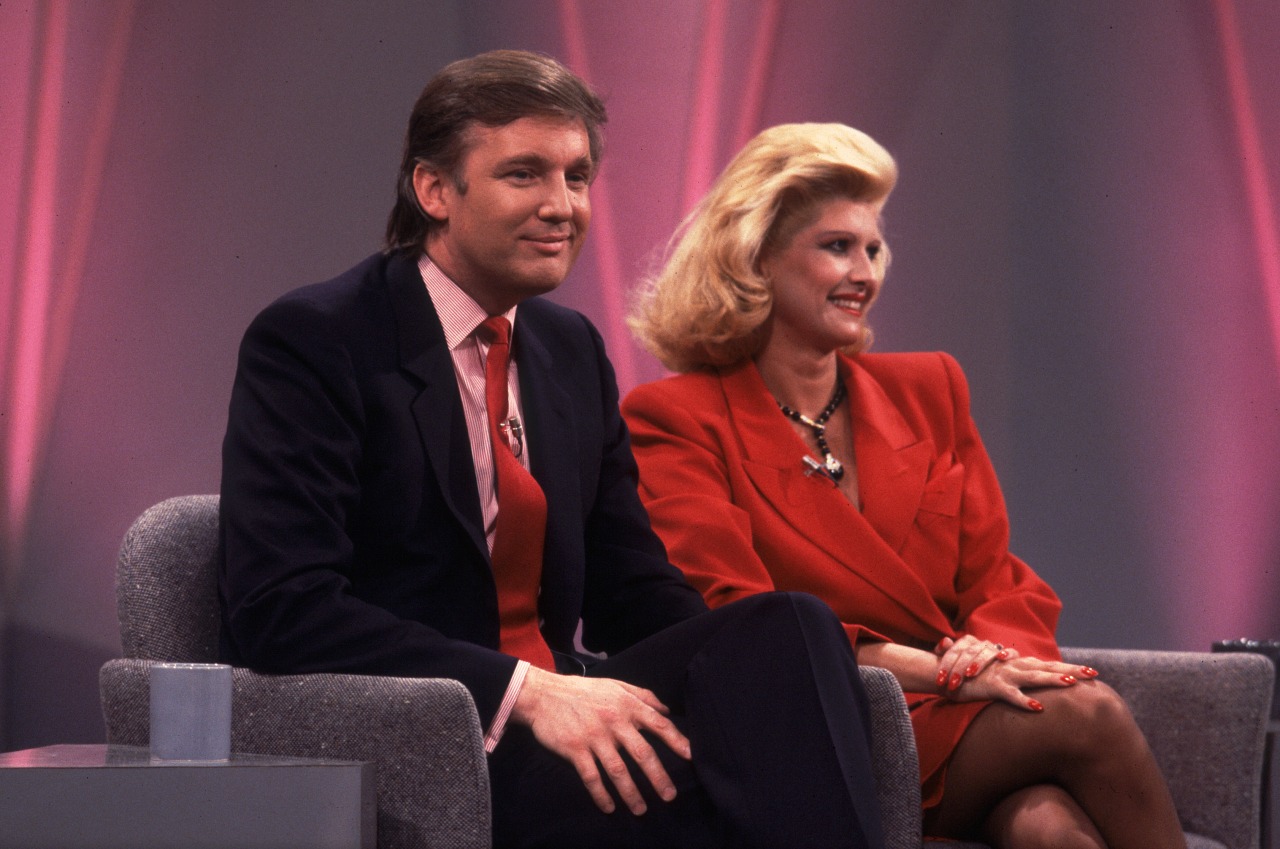
WASHINGTON—A smooth-faced 41-year-old Donald Trump settled in before a live studio audience assembled for The Oprah Winfrey Show and held forth on how America should be getting a cut of Kuwaiti oil.

“Kuwait is not paying us for all the oil they’re sending out,” said Trump, wearing a familiar solid red tie, as Oprah pressed him on his foreign policy views during the April 1988 interview. He complained that the Kuwaitis “live like kings” while the American military protected their tankers amid the Iraq-Iran War.
“Why aren’t they paying us 25% of what they’re making?” Trump asked.
In media interviews going back to the 1980s—long before he would dominate U.S. politics—Trump outlined his interest in the U.S. seizing oil from countries where Americans intervened. Now, in his second term as U.S. president, he’s making an audacious bid to turn his decadeslong fixation into a reality.
For the president, America’s oil—and now Venezuela’s—is both a geopolitical tool to use against oil-dependent Russia and Iran and a way to fight another big nemesis: inflation. Trump believes if he can get oil prices down, he can lower Americans’ cost of living ahead of the midterms, a senior administration official said.
Bolder and more assertive in his second term, Trump has undertaken a slew of initiatives that could bind the U.S. economy to fossil fuels for decades to come. At home, he has delivered a swath of deregulation to free the hands of drillers and undo restrictions on carbon emissions while curbing renewable energy. Abroad, he has voraciously pursued natural resources and pulled the U.S. out of international accords to counter climate change.
“We will be a rich nation again, and it is that liquid gold under our feet that will help to do it,” he said at his inauguration.
The venture carries risks. These days the world is already awash in oil, very unlike the era of energy scarcity that informed Trump’s early views. It could hurt the interests of the U.S. oil industry, which benefits from higher prices. Meanwhile, the dilapidated Venezuelan oil sector will need tens of billions of dollars of investment from those same companies, and would take years to revive in the best-case scenario. It also threatens to upend decades of U.S. foreign policy under which Washington engendered goodwill with allies by protecting sea lanes and serving as a guarantor of the free trade of oil.
“The American people, the American energy industry, and the Venezuelan people will all greatly benefit from President Trump’s control of Venezuelan oil,” said White House spokeswoman Taylor Rogers. She added that the president’s views on energy have been consistent for years “as he has watched the United States get ripped off by other countries” and said that lowering energy prices is a top priority.Trump first sold U.S. strikes on Venezuelan boats and seizures of sanctioned oil tankers as a campaign in the Caribbean front of the war on drugs. Trump’s administration claimed Nicolás Maduro led a drug-trafficking cartel, which it designated a foreign terrorist organization.
But during the lead-up to the U.S. action in Venezuela, Trump repeatedly referenced the nation’s vast oil supplies, according to a senior administration official who heard his comments. And he referenced his desire for the U.S. to benefit from the country’s oil repeatedly in public remarks after the U.S. captured Maduro. Three days after removing Maduro, Trump posted on social media that the U.S. would take possession of up to 50 million barrels of sanctioned oil and bring it to the U.S. where it will be sold on the open market—the profits, he said, to be split between the U.S. and Venezuela.
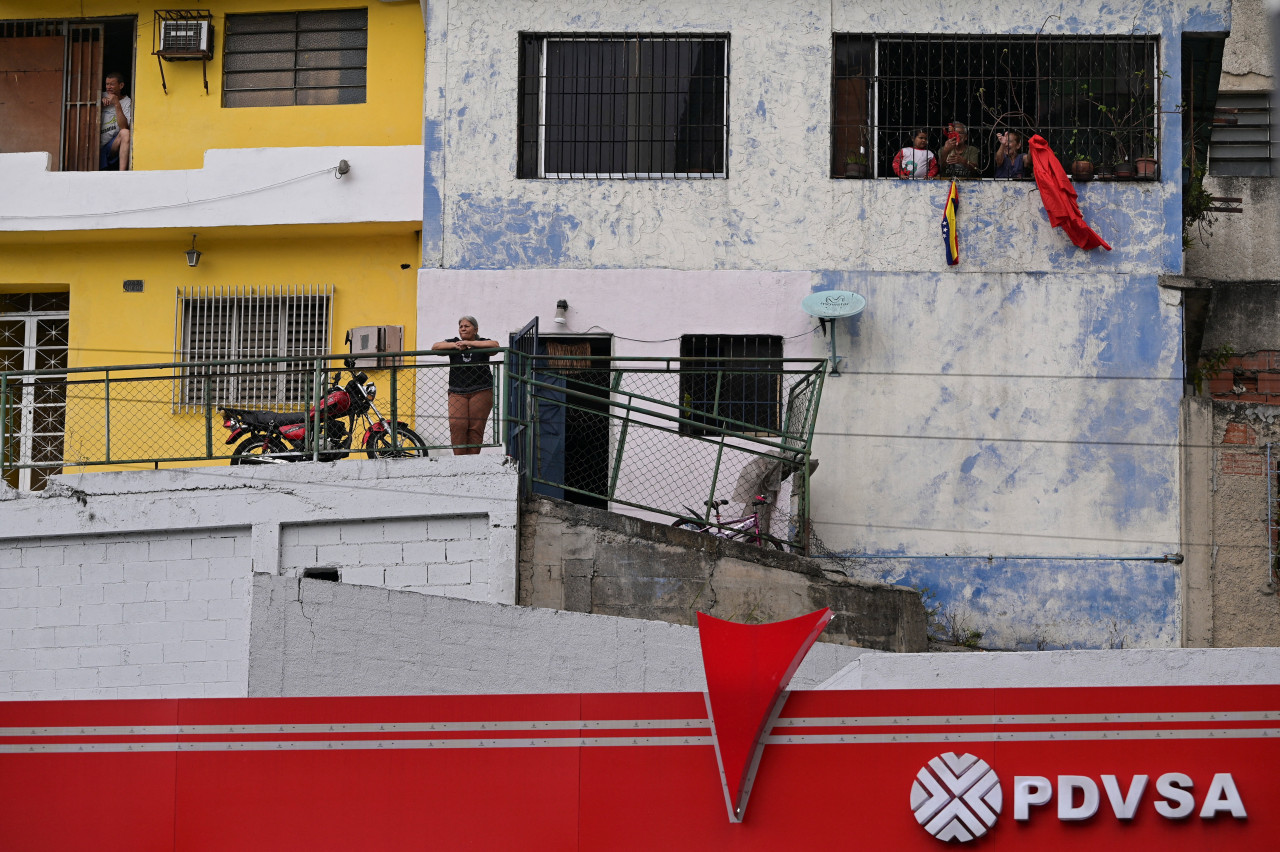
Though many in the oil industry have declared their support for Trump, a 2024 fundraising event in Midland went quiet when the then-Republican candidate promised to bring fuel prices down. Putting more oil on the market also risks ticking off a geopolitical ally, Saudi Arabia, whose government needs higher oil prices to maintain its spending on social programs and economic diversification efforts. Venezuela is one of the founding members of OPEC.
Jim Krane, an energy specialist at Rice University’s Baker Institute for Public Policy in Houston, said the U.S. effort to boost Venezuelan production could set up an eventual clash with OPEC, where the South American country is a member. A U.S.-controlled Venezuelan oil industry could become an oil-market adversary with OPEC, like shale producers did in the 2010s, he said.
“These are serious reserves here, and it’s not something they can wait out like they did with shale,” Krane said. “They finally seemed to figure shale out, and here comes another curveball.”
Soviet influence
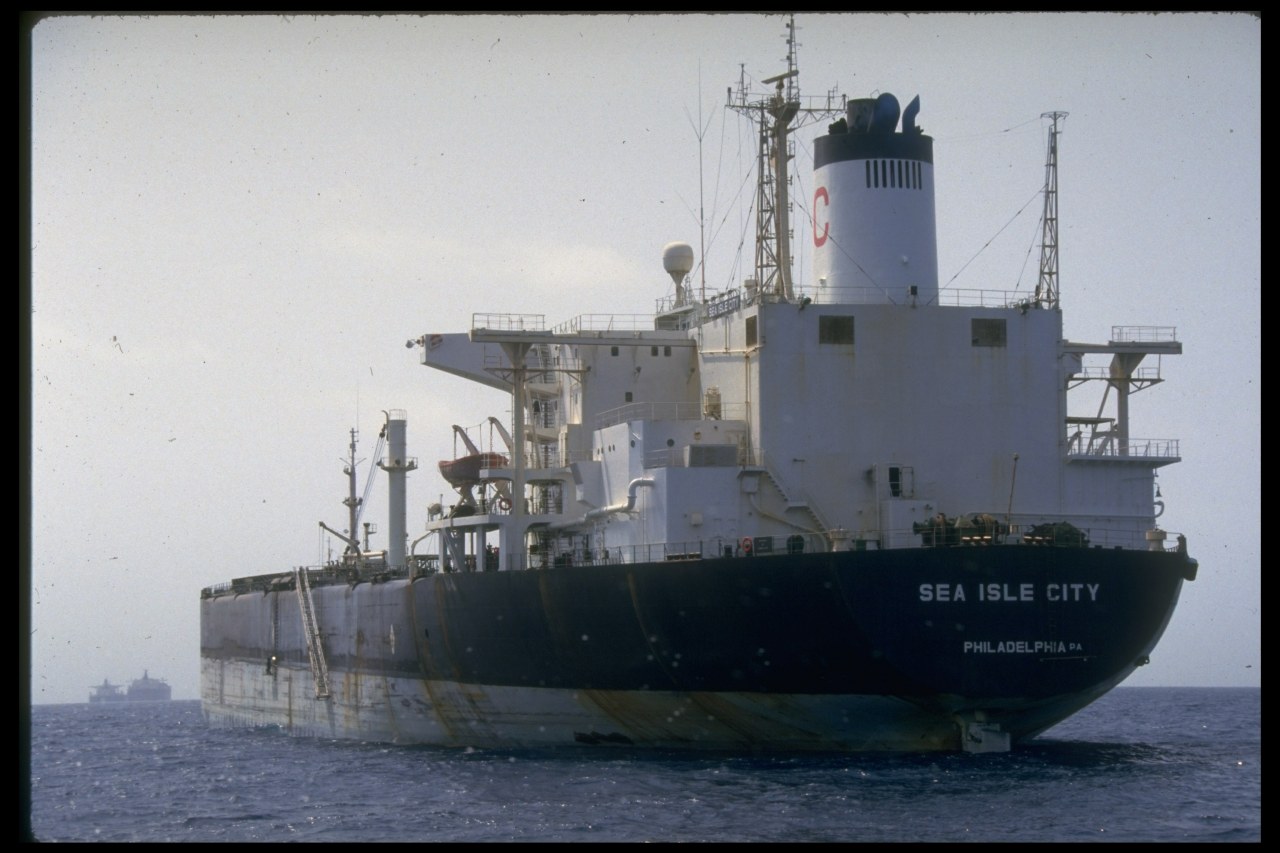
In the late 1980s, the U.S. military provided protection to Kuwaiti tankers in shipping lanes as a conflict between Iran and Iraq raged, a policy that the Reagan administration pursued to blunt Soviet influence in the area. But Trump told Oprah’s audience that the U.S. should receive a major portion of Kuwait’s oil in exchange for the assistance.
“The poorest person in Kuwait, they live like kings,” Trump told Oprah. “Yet they’re not paying. “We make it possible for them to sell their oil.”
Several months before his Oprah appearance, he brought up the policy with another popular TV host. “When I see Kuwait, a total rip off,” Trump told Phil Donahue during a December 1987 interview. “Why aren’t we getting some of that money?”
In October 1980, he told NBC’s Rona Barrett that the U.S. should have used the military more forcefully to free hostages held by Iran, and would have come away from the exchange as “an oil-rich nation.” In his first term, after the U.S. deployed forces to combat ISIS in eastern Syria, Trump asserted that the U.S. left troops there to secure the country’s oil.
“Whether it’s minerals or oil, it’s a similar thing that the United States should, should get reimbursed for their cost of doing the right thing,” said John Catsimatidis, a New York billionaire who has known Trump for decades. “It’s part of his DNA from being a longtime businessman in New York.”
Trump rode to a second go-round in the White House in part on a rebuke of the Biden administration’s efforts to fight climate change and limit fossil fuels. For the frackers, Trump’s ascension was a new lease on life. Oil donors spent millions on Trump’s campaign, seeking revenge for former Joe Biden’s push to transition the economy away from oil.
When the American Petroleum Institute, the oil industry’s top lobbying firm, held its first meeting with Biden’s energy secretary, Jennifer Granholm, she said if oil companies don’t change their ways, “we would become Kodak,” said Mike Sommers, the institute’s CEO.
Trump and his allies in Congress have accomplished 90% of the policy agenda API rolled out in June 2024, he said, thanks partly to the One Big Beautiful Bill, and they’re working on a key remaining item: permitting reform.
Trump eviscerated Biden’s limits on offshore drilling, proposing drillers plumb the ocean floor even off the coast of California, where the sight of rigs is political poison for the state’s Republicans. The president’s team nixed billions in funding for electric-vehicle charging stations, wind, solar and hydrogen projects, and a tax credit meant to boost consumer demand for EVs.

His Environmental Protection Agency is trying to repeal the landmark scientific finding that greenhouse gases endanger public health, which gives it authority to regulate emissions.
He withdrew the U.S. from the 2015 Paris climate accords, and promised U.S. oil executives to push the European Union to roll back two major climate laws. He also fought against climate laws that target oil companies and favor renewable energy from New York to California.
In return, he wanted the U.S. to dominate the global fossil-fuel market. Frackers expanded output to a record 13.8 million barrels a day, up 10% since the month he took office. He also persuaded the Saudi Arabia-led OPEC to hike its production, which since January is up 7%.
For some in the oil patch, it has been a case of, be careful what you wish for. U.S. oil prices have fallen 26%, low enough to injure U.S. oil producers.
But not low enough for Trump, who wants to corral inflation by flooding the oil market. “Low energy prices are like a massive tax cut for everybody in the U.S.,” said Jeff Nichols, a partner at Dallas energy-focused law firm Haynes and Boone.
‘Get ready’
Weeks before the U.S. strikes on Venezuela that culminated in Maduro’s capture, Trump had a vague but tantalizing message for a couple of American oil executives: “Get ready.” Big changes are coming to Venezuela, he hinted.
Now, the White House is considering a plan to assert control over Venezuela’s state-run oil company, including acquiring and marketing its oil, possibly for years, according to people familiar with the matter. Trump has also said U.S. oil companies will plow billions into Venezuela to bring its heavy crude back into global circulation.
The U.S. move to seize oil tankers carrying Venezuelan crude is a vast departure from the nation’s historical role, alongside European countries, to guarantee safe passage of globally traded commodities such as oil and food through the Strait of Hormuz, the Red Sea, the Suez Canal and other global pinch points, said Ramanan Krishnamoorti, vice president of energy and innovation at the University of Houston.
“This is different, especially now with having removed a leader of a country, left the regime in place, and now still controlling their resources,” Krishnamoorti said. “This puts our credibility at risk.”
Trump has told aides he believes his efforts will bring oil prices down to his favored level, $50 a barrel. The plan would bring one of the world’s largest oil reserves effectively under U.S. control, and out of the hands of geopolitical rivals China and Russia. Lowering oil prices would also combat inflation.
“It’s the one product people see nearly every day at their street corner,” said Andy Lipow, president of Lipow Oil Associates in Houston. “Rising and falling gasoline prices, for many people, hits them in their pocketbook right away. Do you know what the last price was that you paid for spaghetti sauce? I bet you know what you paid for gasoline.”
Some U.S. oil executives said Trump’s effort to flood the market is forcing producers to adjust to lower prices and hope that regular supply-and-demand economics take over again eventually.
In a series of conversations over the past year with Trump, Chevron CEO Mike Wirth told the president it was imperative the U.S. have access to some of the world’s largest oil reserves and shouldn’t let rivals, including Russia and China, gain ground there, say people familiar with the talks, who add that Trump was receptive to those arguments. Wirth never advocated regime change, according to these people.
Chevron, the only major U.S. driller operating in Venezuela, has the ability to raise production there anywhere from 50,000 to 300,000 barrels a day over a year or more by repairing broken pipelines and taking other steps to reduce the bottlenecks within the country’s infrastructure, according to people familiar with the matter. But any significant boost to production will take years, they said.
On Wednesday, Energy Secretary Chris Wright said at a Goldman Sachs conference near Miami that he believed Venezuela could produce several hundred thousand additional barrels a day in the short- to medium term with low levels of investment.
Trump intends to meet with representatives of Chevron, Exxon Mobil, ConocoPhillips and others at the White House on Friday to discuss reviving Venezuela’s oil sector.
Oil majors are expected to press for financial guarantees from the administration before making any major investments, according to people familiar with the matter. They will also need robust security to guard workers from guerrilla groups active in Venezuela’s Orinoco belt, as well as certainty that contracts will be upheld, these people said.
Any guarantees promised to large oil companies to invest in Venezuela would upset many of Trump’s allies in the oil patch, the smaller independent drillers, who would have to continue competing without the subsidies of their larger rivals, some executives said.
David Goldwyn, head of Goldwyn Global Strategies and a former Obama administration official, said it may be a pipe dream to expect oil companies to risk large sums on turning around Venezuela. Among other factors, the country’s current leader, Delcy Rodríguez, would need to create and pass into law a more attractive legal and fiscal regime, he said.
“Maybe it would be competitive with other options that companies have,” he said. “But this is all highly uncertain.”
Write to Annie Linskey at annie.linskey@wsj.com and Collin Eaton at collin.eaton@wsj.com

One Subscription.
Get 360° coverage—from daily headlines
to 100 year archives.


HT App & Website


